
Blog

What Is a Certified Pre-Owned (CPO) Vehicle, and Is It Worth It?

Buying used can save you money, but it can also leave you wondering what you don't know about the car's past. That's where a certified pre-owned vehicle comes in. A CPO car is a used vehicle that has been inspected, reconditioned, and backed by extra warranty coverage from the automaker. At Korum Automotive Group, we sell certified Ford, Lincoln, and Hyundai vehicles every day, so we get this question a lot. Here's how CPO works, how it compares to a regular used car, and how to decide if it's worth it for you.

What Does "Certified Pre-Owned" Mean?

"Certified pre-owned" isn't just a sales label. A true manufacturer CPO vehicle has to meet rules set by the automaker, not just the dealership. While every brand runs its program a little differently, most share the same core steps:

  • Age and mileage limits, so only newer, lower-mileage vehicles qualify
  • A multipoint inspection by trained technicians, with parts that fall short repaired or replaced
  • Extra warranty coverage that goes beyond a typical used-car sale
  • Added perks such as roadside assistance or a return window

Some dealers also sell "certified" cars under their own in-house programs. Those can be fine, but the coverage depends on the dealer, not the manufacturer. When you shop, ask whose program backs the car. You can browse factory-certified options in our certified pre-owned inventory.

CPO vs. Used: What's the Difference?

Every CPO vehicle is used, but not every used vehicle can be certified. Here's how the two usually compare:

Certified Pre-Owned

  • Must pass a brand-specific inspection and meet age and mileage rules
  • Includes manufacturer-backed warranty coverage
  • Often comes with roadside assistance and other perks
  • Usually costs more than a similar non-certified car

Standard Used

  • Can be any age, mileage, or brand
  • Coverage depends on what's left of the original warranty, if anything
  • Often has a lower price up front
  • Puts more of the research on you, such as getting an inspection and history report

A standard used car can still be a great buy, especially for older or budget-friendly models. Browse our used vehicle inventory to compare both side by side.

How Ford, Lincoln, and Hyundai CPO Programs Compare

Since we sell all three brands, here's a quick look at what each program offers. Terms can change, so ask our team to confirm the details on any vehicle you're considering.

Ford Blue Advantage

Ford's program has two tiers. Gold Certified covers Ford models up to six years old with fewer than 80,000 miles. These pass a 172-point inspection and include a 12-month/12,000-mile comprehensive limited warranty plus a 7-year/100,000-mile powertrain limited warranty from the original in-service date. Blue Certified covers vehicles of any make up to 10 years old with fewer than 150,000 miles. Both tiers include a 14-day/1,000-mile money-back guarantee.

Lincoln Certified Pre-Owned

Lincoln now offers two tiers. Signature vehicles have fewer than 60,000 miles, pass a 200-point inspection, and get warranty coverage for up to 6 years from the original warranty start date or 100,000 miles. Select vehicles can be a bit older, with fewer than 80,000 miles, a 139-point inspection, and a 12-month/12,000-mile warranty. Both include 24/7 roadside assistance and a 14-day/1,000-mile money-back guarantee.

Hyundai Certified Pre-Owned

Hyundai certifies vehicles seven years old or newer with fewer than 80,000 miles. Each one passes a 173-point inspection. The headline perk is a 10-year/100,000-mile powertrain limited warranty from the original in-service date, along with roadside assistance and a complimentary CARFAX vehicle history report.

Is a CPO Vehicle Worth It?

For many shoppers, yes. But it depends on your priorities. A CPO vehicle is likely worth it if:

  • You want new-car peace of mind without paying new-car prices
  • You plan to keep the vehicle for several years and value warranty coverage
  • You'd rather skip arranging your own pre-purchase inspection
  • You want access to manufacturer financing offers on used vehicles, when available

A standard used car may make more sense if you're shopping on a tight budget, you're comfortable handling repairs, or the model you want is too old to qualify. Either way, compare the total cost, including the price, warranty, and expected maintenance, rather than the sticker alone. Our online finance application can help you see what fits your budget before you visit.

Tips for Shopping CPO in the Puyallup Area

  • Ask which program certifies the car and get the warranty terms in writing
  • Review the inspection checklist and vehicle history report
  • Check when the warranty clock started, since some coverage runs from the original sale date
  • Get a value on your current vehicle before you shop
  • Test drive more than one trim or model year to compare features

Whether you're coming from Tacoma, Sumner, or Kent, knowing your trade-in value up front makes the process smoother. Start with our Kelley Blue Book Instant Cash Offer.

Frequently Asked Questions

What is a certified pre-owned vehicle?

A certified pre-owned vehicle is a used car that meets an automaker's age and mileage limits, passes a multipoint inspection, and comes with extra manufacturer-backed warranty coverage. Many programs also add perks like roadside assistance and a money-back guarantee.

Is a certified pre-owned car better than a used car?

A CPO car usually offers more peace of mind thanks to its inspection and added warranty, but it typically costs more than a similar non-certified car. A standard used car can be the better value if you're on a tight budget or want an older model that doesn't qualify.

What warranty comes with a certified pre-owned vehicle?

It depends on the brand. Ford Gold Certified includes a 12-month/12,000-mile comprehensive limited warranty and a 7-year/100,000-mile powertrain warranty, while Hyundai CPO includes a 10-year/100,000-mile powertrain warranty from the original in-service date. Always confirm the current terms with your dealer.

Can I return a certified pre-owned vehicle?

Ford Blue Advantage and Lincoln CPO vehicles include a 14-day/1,000-mile money-back guarantee, whichever comes first. Conditions apply, so ask your salesperson to explain the details before you buy.

Where can I shop certified pre-owned vehicles near Puyallup?

Korum Automotive Group offers certified Ford, Lincoln, and Hyundai vehicles across our stores on River Road in Puyallup, plus Korum Pre-Owned at 711 North Meridian. Call 253-845-6600 to ask about a specific vehicle or schedule a test drive.

Find Your Next Certified Pre-Owned Vehicle at Korum

A certified pre-owned vehicle gives you the savings of buying used with the added confidence of a factory inspection and warranty. If that balance sounds right for you, our team can walk you through the Ford, Lincoln, and Hyundai programs and help you compare options. Browse our certified pre-owned vehicles online, or call 253-845-6600 to plan your visit to Korum Automotive Group.

Recommended Posts

Cadillac OPTIQ vs. LYRIQ: Which Electric SUV Size Is Right for You?

Cadillac now offers more than one way to go electric, and two of its most popular choices sit side by side in the lineup: the OPTIQ and the LYRIQ. Both are five-passenger luxury SUVs with the same signature 33-inch display, available Super Cruise, and the quiet, instant power that makes driving an EV so satisfying. The real question is size. When you compare the Cadillac OPTIQ vs. LYRIQ, a few inches and a few cubic feet can make a big difference in how each one fits your life. Here's a side-by-side look from the team at Bentley Cadillac. Size and Space: How the OPTIQ and LYRIQ Measure Up The OPTIQ is Cadillac's compact electric SUV, while the LYRIQ steps up to midsize. Both seat five, but the LYRIQ's longer wheelbase pays off in rear legroom and cargo space. Spec Cadillac OPTIQ Cadillac LYRIQ Length 190.0 in 196.7 in Wheelbase 116.0 in 121.8 in Rear legroom 37.8 in 39.6 in Cargo behind 2nd row 26.0 cu ft 28.0 cu ft Max cargo 57.0 cu ft 60.8 cu ft Seating 5 5 In everyday terms, the OPTIQ is nearly seven inches shorter, which makes it easier to park downtown and tuck into a home garage. The LYRIQ gives taller rear passengers a little more stretch-out room and adds a few extra cubic feet for luggage, strollers, or sports gear. Explore features and trims on our Cadillac OPTIQ model page. Range, Power, and Charging Both SUVs offer a single-motor rear-wheel-drive setup or a dual-motor all-wheel-drive setup. The LYRIQ's larger battery, about 102 kWh versus roughly 85 kWh in the OPTIQ, gives it more power and a bit more range. Cadillac OPTIQ RWD: up to 315 horsepower and up to 317 miles of EPA-estimated range AWD: up to 440 horsepower DC fast charging that can add up to 76 miles of range in about 10 minutes Cadillac LYRIQ RWD: up to 365 horsepower and up to 326 miles of EPA-estimated range AWD: up to 515 horsepower DC fast charging that can add up to 86 miles of range in about 10 minutes Both models also offer high-performance V-Series versions for drivers who want even more speed. For most daily drivers, either SUV covers a full week of commuting on a single charge, especially if you plug in at home overnight. Planning a home charger? Learn more about home charging solutions through GM Energy. Both SUVs also offer Level 2 home charging at 11.5 kW as standard, with available 19.2 kW charging for faster top-ups, and both are compatible with Vehicle-to-Home technology that can help power your home during an outage when paired with the right equipment. The OPTIQ also comes with a NACS charge port, which simplifies access to a growing network of public fast chargers. For drivers around Huntsville who split time between short errands and weekend trips to the lake or the mountains, either range figure leaves plenty of cushion. Technology and Comfort Inside Step into either SUV and you'll find a lot in common. Each features Cadillac's 33-inch diagonal LED display with 9K resolution, Google built-in, wireless phone charging, and a panoramic fixed glass roof with power shade. Available Super Cruise offers hands-free driver assistance on compatible roads. A few differences stand out: Audio: the OPTIQ comes with a 19-speaker AKG Studio Surround system, while Premium LYRIQ trims offer a 23-speaker AKG Studio system with available Dolby Atmos. Comfort: Premium OPTIQ trims add a head-up display plus ventilated and massaging front seats, while Signature LYRIQ trims add an augmented reality head-up display and tri-zone climate control. Lighting: the LYRIQ offers 126-color ambient interior lighting for a personalized cabin glow. See the LYRIQ's full feature list and trim walk on our Cadillac LYRIQ model page. Which Cadillac EV Is Right for You? Choose the OPTIQ if you: Do most of your driving around town and want an easier SUV to park Usually carry one or two passengers and occasional cargo Want Cadillac EV luxury and tech in a more compact size Choose the LYRIQ if you: Regularly carry adults or teens in the back seat Take frequent road trips and value the longest available range Want more power and a few extra cubic feet of cargo room Need room for more than five? Cadillac's three-row VISTIQ is worth a look, too. Still deciding between these two? The best way to feel the difference is an extended drive, so ask about our Cadillac EV test drive experience. Frequently Asked Questions What is the difference between the Cadillac OPTIQ and LYRIQ? The OPTIQ is a compact electric SUV, while the LYRIQ is midsize. The LYRIQ is about 6.7 inches longer, offers more rear legroom and cargo space, and uses a larger battery for more power and slightly more range. Both seat five and share the 33-inch display and available Super Cruise. Which has more range, the OPTIQ or the LYRIQ? The LYRIQ has a slight edge, with up to 326 miles of EPA-estimated range in rear-wheel-drive form. The OPTIQ offers up to 317 miles of EPA-estimated range with rear-wheel drive. Actual range varies by trim, drivetrain, and driving conditions. Does the Cadillac OPTIQ have less cargo space than the LYRIQ? Yes, but not by much. The OPTIQ offers 26 cubic feet behind the second row and 57 cubic feet with the seats folded. The LYRIQ offers 28 and 60.8 cubic feet, respectively. Is the Cadillac OPTIQ or LYRIQ available with all-wheel drive? Both are. The OPTIQ dual-motor AWD setup produces up to 440 horsepower, while the LYRIQ dual-motor AWD setup produces up to 515 horsepower. Rear-wheel drive is also available on both. Where can I test drive the OPTIQ and LYRIQ near Madison, AL? Bentley Cadillac at 2118 Drake Ave SW in Huntsville is a short drive from Madison, Decatur, and Athens. Call 256-207-8246 to schedule back-to-back test drives of both models. Compare the OPTIQ and LYRIQ in Huntsville When you weigh the Cadillac OPTIQ vs. LYRIQ, the right choice comes down to how much space you need. The OPTIQ delivers Cadillac EV luxury in a nimble, easy-to-park package, while the LYRIQ adds room, power, and range for families and road-trippers. The best way to decide is to drive them back to back. Visit our showroom on Drake Avenue or call 256-207-8246, and our team can also walk you through Cadillac financing options for whichever electric SUV fits you best

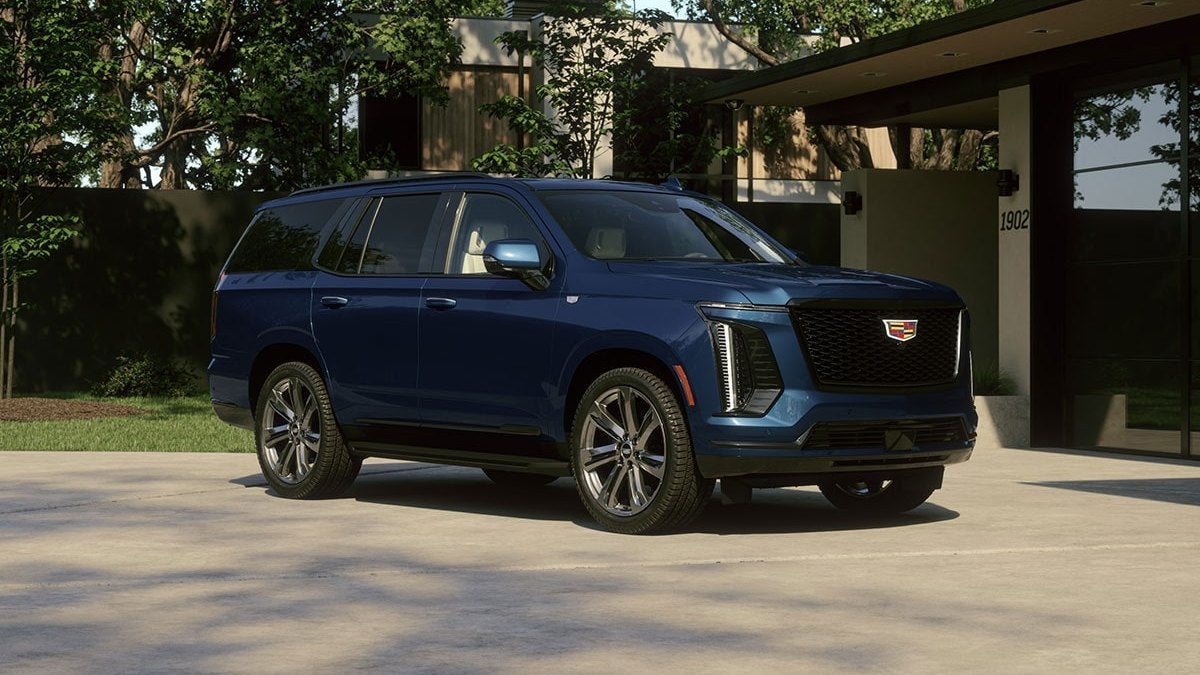
Cadillac Escalade full-size luxury SUV parked in a driveway

Cadillac Escalade vs. Escalade ESV: Which Is Right for You?

The Cadillac Escalade sets the standard for full-size luxury SUVs, and it comes in two lengths. The Cadillac Escalade vs. Escalade ESV choice is simpler than it looks: both share the same engines, the same curved display and the same trims. The ESV adds length, and with it more third-row legroom and a much larger cargo area. At Bentley Cadillac in Huntsville, here is how we help drivers choose the right one. The Cadillac Escalade. Image: Cadillac What Both Escalade Models Share Whichever length you pick, you get the same Escalade experience: Trims: Luxury, Sport, Platinum Luxury, Platinum Sport and the high-performance V-Series. Power: a 6.2L V8 rated at 420 horsepower and 460 lb-ft of torque with a 10-speed automatic. The V-Series uses a supercharged 6.2L V8 rated at 682 horsepower and 653 lb-ft. Display: a curved, pillar-to-pillar 55-inch display across the front of the cabin. Super Cruise: hands-free driver assistance comes standard with a 3-year OnStar plan. Audio: a standard 21-speaker AKG Studio system, with an available 38-speaker AKG Studio Reference system with Dolby Atmos. An available Executive Second Row adds personal screens, tray tables and massaging seats for rear passengers. See the full feature list on our Escalade and Escalade ESV model page. Size and Space Compared Measurement Escalade Escalade ESV Overall length 211.9 in 226.9 in Wheelbase 121 in 134 in Third-row legroom 34.9 in 36.7 in Cargo behind 3rd row 25.5 cu ft 41.5 cu ft Cargo behind 2nd row 72.9 cu ft 94.1 cu ft Maximum cargo 120.5 cu ft 142.2 cu ft Max towing 8,100 lbs 8,000 lbs The ESV is 15 inches longer, and 13 of those inches go into the wheelbase. That gives third-row passengers almost two extra inches of legroom and adds 16 cubic feet of cargo space behind the third row. With all seats in use, the standard Escalade holds 25.5 cubic feet, while the ESV holds 41.5, enough for luggage for a full family trip. Both versions seat up to eight, while V-Series models seat seven. Browse our new Cadillac inventory to see which configurations are on the lot. What the extra space means on a road trip Cargo numbers are easier to picture in real use. Behind the third row, the standard Escalade fits weekend bags and groceries, while the ESV has room for full-size suitcases with every seat filled. Fold the third row and the gap stays large: 72.9 cubic feet in the Escalade versus 94.1 in the ESV. With both rear rows folded, the ESV offers 142.2 cubic feet, about 22 more than the standard model. Rear-Seat Comfort and the Executive Second Row Both lengths offer the available Executive Second Row package, which turns the second row into a first-class cabin. It adds 12.6-inch personal screens, tray tables, a rear command center, massaging seats and headrest speakers, and it brings the AKG Studio Reference system up to 42 speakers. In the ESV, those second-row passengers also have more space behind them, since the longer body gives the third row extra legroom and keeps cargo room available. The V-Series in either length The Escalade-V is offered as both an Escalade and an ESV. Its supercharged 6.2L V8 makes 682 horsepower and 653 lb-ft of torque, and both versions seat seven. Towing is rated at 7,200 lbs for the Escalade-V and 7,000 lbs for the Escalade-V ESV. Driving, Parking and Towing The standard Escalade is easier to park At 211.9 inches, the standard Escalade is the easier SUV to maneuver in a parking garage or a busy lot in Madison or Hampton Cove. The ESV is 226.9 inches long, about 18 feet 11 inches, so measure your garage before you decide. Towing is nearly identical Cadillac rates the Escalade to tow up to 8,100 lbs and the ESV up to 8,000 lbs when properly equipped. The V-Series models are rated at 7,200 lbs and 7,000 lbs. For most boats and campers, either length will do the job. If you are comparing the Escalade with other Cadillac SUVs, our guide to the Cadillac lineup covers every model. The longer Escalade ESV. Image: Cadillac Which Escalade Should You Choose? Choose the Escalade if you: Want the easiest Escalade to park and garage Use the third row for shorter trips Want the highest towing rating Choose the Escalade ESV if you: Carry adults in the third row often Need room for luggage with every seat in use Take long family road trips Long highway trips are where both models shine. Super Cruise comes standard on every Escalade, so the drive to Nashville or the Gulf Coast can include stretches of hands-free driving on compatible roads, whichever length you choose. Prefer electric power? The all-electric Escalade IQ and the longer Escalade IQL follow the same two-size idea. Once you have narrowed it down, our finance team can walk you through options on any Escalade, including for drivers coming from Decatur. Frequently Asked Questions What is the difference between the Escalade and Escalade ESV? The Escalade ESV is 15 inches longer, with a 13-inch longer wheelbase, more third-row legroom and more cargo space. Both share the same engines, trims and technology. How much longer is the Escalade ESV than the Escalade? The ESV measures 226.9 inches long compared with 211.9 inches for the standard Escalade, a difference of 15 inches. Do both Escalade models have Super Cruise? Yes. Super Cruise hands-free driver assistance comes standard on both the Escalade and Escalade ESV, along with a 3-year OnStar plan. How much can the Escalade and Escalade ESV tow? Cadillac rates the Escalade at up to 8,100 lbs and the ESV at up to 8,000 lbs when properly equipped. V-Series models are rated at 7,200 lbs and 7,000 lbs. Can I test drive both Escalade models at Bentley Cadillac? Yes. Visit Bentley Cadillac at 2118 Drake Ave SW in Huntsville or call 256-207-8246 to schedule a side-by-side test drive. Compare Both Escalades at Bentley Cadillac The Cadillac Escalade vs. Escalade ESV decision comes down to how often you fill the third row and how much cargo you carry. The standard Escalade is easier to park and tows a little more, while the ESV gives every passenger more room and adds serious cargo space. Contact our team and we will have both ready for a side-by-side look in Huntsville.